You don't need a diagnosis to know something isn't right. If your child is struggling, there are often early signs — and catching them early matters.
Academic Signs
- Falling behind in reading, writing, or math compared to peers
- Difficulty retaining information
- Trouble following multi-step directions
- Consistently low grades despite effort
- Avoiding homework or schoolwork entirely
Behavioral Signs
- Frequent frustration or emotional shutdowns during schoolwork
- Avoiding tasks that feel too hard
- Acting out in class or at home related to school stress
- Withdrawing from activities they used to enjoy
Social & Emotional Signs
- Difficulty making or keeping friends
- Anxiety about going to school
- Low self-confidence or negative self-talk
- Emotional outbursts that seem disproportionate
What to Do Next
Step 1: Document What You're Seeing
Start writing down specific behaviors, struggles, and patterns. Include dates and details.
Step 2: Talk to Your Child's Teacher
Ask what they're seeing in the classroom — and follow it up in writing.
Step 3: Request an Evaluation in Writing
You have the legal right to request a special education evaluation. Put your request in writing so the timeline starts.
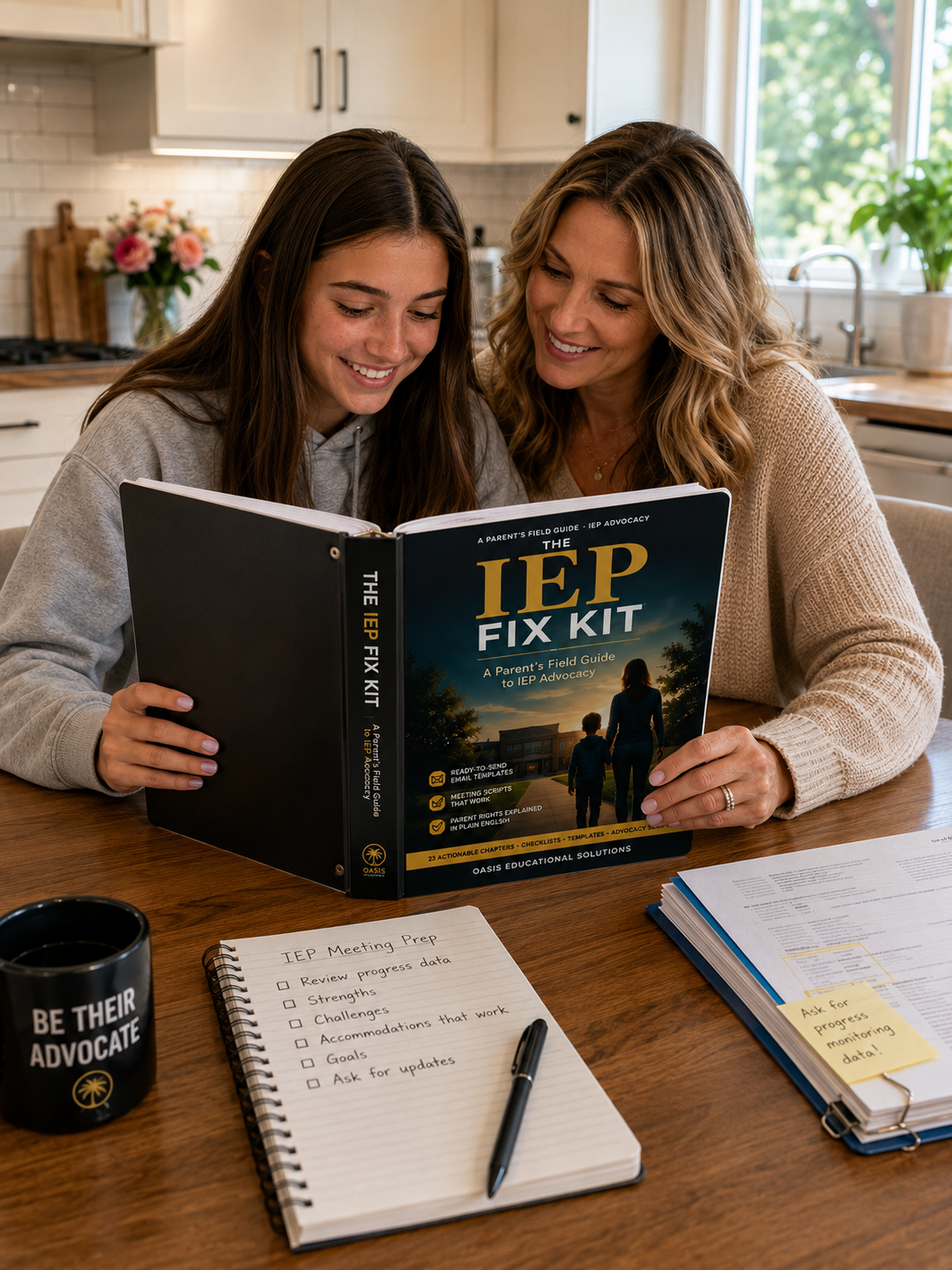
Want the full playbook? The IEP Fix Kit ($37.99) walks you through every step with chapter-by-chapter strategy and 11 ready-to-send email templates.